How Plastic Bin Suppliers in UAE Help Businesses Improve Waste Sorting
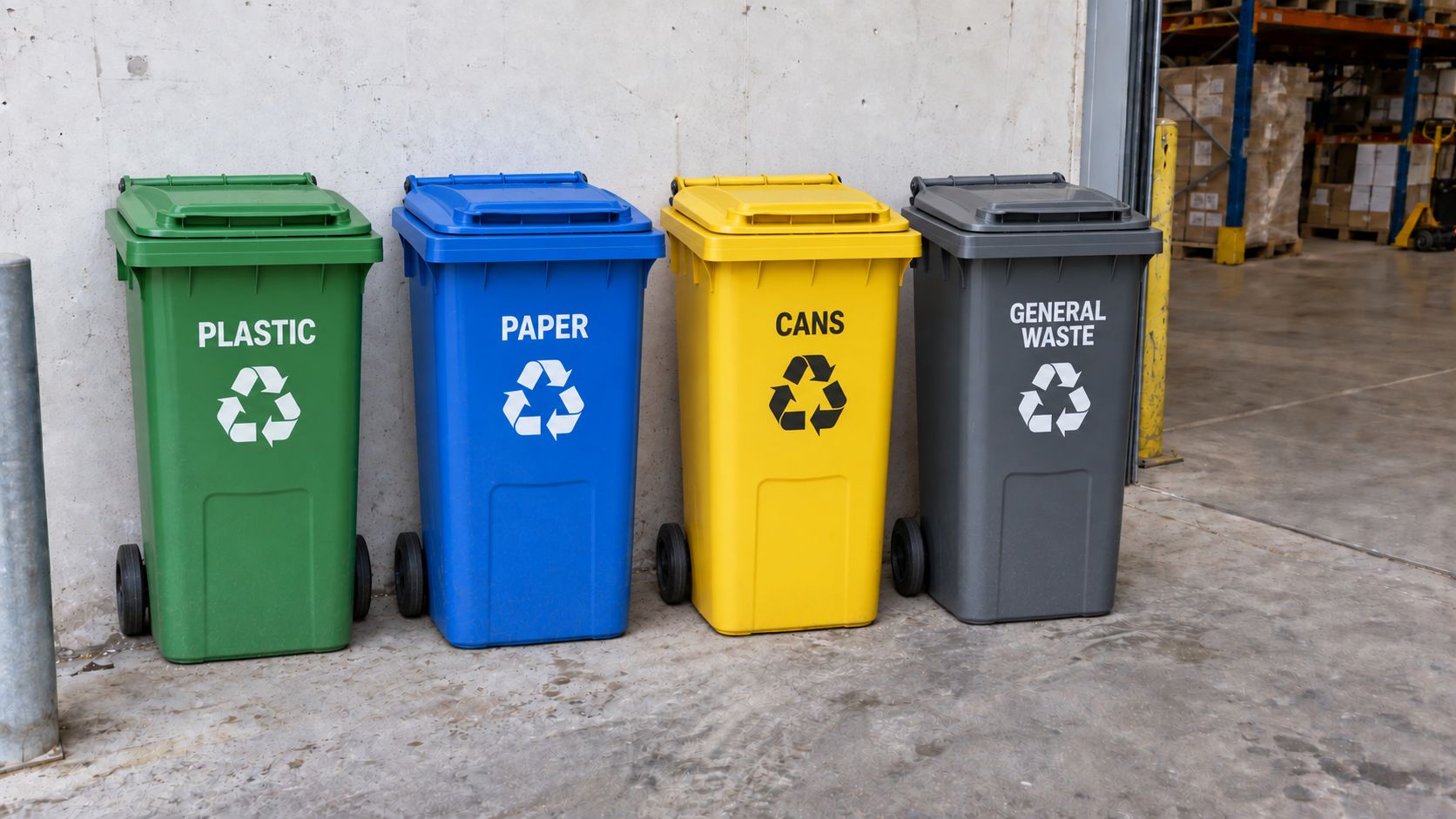
A good plastic bin supplier in the UAE
improves waste sorting by helping a business choose the right number, size and
colour of bins for each waste stream, supplying durable UV-stabilised HDPE bins
that fit collection vehicles under the EN 840 standard, adding clear bilingual
labels, coloured lids or aperture lids that guide correct disposal, and keeping
matching bins available as the site grows. With Dubai Law No. 18 of 2024 and
emirate-level waste strategies pushing source segregation and record keeping, bins
have become a compliance tool, not just a container.
Most waste
sorting programmes do not fail at the recycling plant. They fail at the bin. A
recycling bin placed too far from where waste is generated, a label that has
faded in the sun, a bin that is too small and overflows, or a lid that lets
anything in, and the stream becomes contaminated before a collection truck ever
arrives.
That is why the
choice of plastic bin supplier matters. This article explains how UAE
businesses can use their bin supplier to design a sorting system that staff
actually follow, and what to look for when choosing one.
Key takeaways
■ Sorting succeeds or fails at the point of disposal, so
bin size, placement and labelling matter.
■ UAE waste rules are tightening, with Dubai requiring many
establishments to keep waste registers.
■ EN 840 compatibility ensures bins fit the lifting
mechanisms on collection vehicles.
■ Aperture lids and bilingual pictogram labels reduce
contamination in multilingual workplaces.
■ Colour schemes vary between authorities, so align with
your authority and contractor and stay consistent across your site.
Why Is Waste Sorting a Priority for UAE
Businesses in 2026?
Waste
management in the UAE is governed nationally by Federal Law No. 12 of 2018 on
Integrated Waste Management, which covers waste segregation, collection,
recycling and disposal across all emirates, including free zones. Emirate-level
rules then add detail.
In Dubai, Law
No. 18 of 2024 Regulating Waste Management applies across the emirate,
including free zones, with Dubai Municipality supervising implementation. Its
implementing bylaw, Administrative Resolution No. 34 of 2026, requires
categories including residential complexes, commercial complexes, hotels and
industrial establishments to keep waste registers covering waste types,
quantities, segregation and sorting operations, carriers and disposal sites.
The law also prohibits placing hazardous waste in non-hazardous containers.
Dubai's Integrated Waste Management Strategy 2021–2041 sets the long-term
direction towards landfill diversion.
In Abu Dhabi,
Tadweer Group leads integrated waste management, and in Sharjah, Bee'ah plays a
central role in collection and recycling. For businesses, the practical message
is the same everywhere: waste must be separated at source and the process must
be documented. The right bins make both far easier.
What Does a Plastic Bin Supplier Actually Do
for Waste Sorting?
A capable
supplier does much more than deliver containers. The best suppliers contribute
in eight ways.
1. Waste Stream Mapping and Bin Planning
The supplier
helps identify the waste streams your site produces, such as general waste,
cardboard and paper, plastics, metal cans, glass and food waste, and where each
is generated. Hazardous waste is handled separately in approved containers.
This mapping determines how many bins you need, of what type and where they
should go.
2. Right-Sizing Bin Capacity
Bins that are
too large encourage people to throw anything in, while bins that are too small
overflow and contaminate neighbouring streams. Typical choices are 120L and
240L two-wheeled bins for offices, kitchens and production lines, and 660L
four-wheeled bins for loading bays, compounds and central collection points. In
UAE summer heat, food waste generates odour quickly, so smaller bins with
tight-fitting lids and more frequent collection often work better than one
large container.
3. Colour Coding and Clear Labelling
Colour is the
fastest visual cue for sorting, applied through the bin body, the lid or both.
Because colour schemes differ between authorities and waste contractors in the
UAE, a good supplier helps you align with your authority and licensed
contractor, then applies that scheme consistently across every location. Labels
should combine Arabic and English text with clear pictograms, which is
essential in workplaces with staff from many language backgrounds. Hot-stamped
or durable in-mould markings last far longer in direct sunlight than stickers,
which fade and peel.
4. Collection-Compatible, Standard-Compliant
Bins
EN 840 is the
European standard for mobile waste containers. It defines dimensions, lifting
interfaces and performance requirements so that bins can be emptied safely by
the lifting mechanisms on collection vehicles. Bins that do not match the
lifters used by your licensed contractor can be damaged or refused. A reliable
supplier confirms compatibility before you order.
5. Durability for UAE Conditions
Outdoor bins in
the UAE face intense UV radiation, high temperatures, dust and frequent
washing. High-density polyethylene with UV stabilisation resists cracking and
fading, while robust wheels, axles and lid hinges keep bins mobile and closed.
Ask whether spare lids, wheels and axles are available, since replacing a part
costs far less than replacing a bin.
6. Specialised Lids That Guide Correct
Disposal
Aperture lids
physically steer people towards the right choice: a narrow slot for paper, a
round opening for cans and bottles. They are one of the simplest ways to cut
contamination in recycling streams. Lockable lids protect confidential paper,
and foot-pedal bins support hygiene in kitchens and clinics.
7. Stock, Scale and Consistency
Facilities
management companies, developers and multi-site businesses need identical bins
across every location, and matching bins when sites expand. A supplier with
local manufacturing and stock can deliver consistent colours and models over
years, not just for the first order.
8. Tracking and Reporting Readiness
Serial numbers,
barcodes or RFID chip holders help link bins to locations and collections. As
waste registers become a routine requirement in Dubai, this kind of
identification makes it easier to record quantities and demonstrate how waste
is segregated.
How Should a Business Set Up a Bin System
People Actually Use?
1.
Always pair recycling
bins with a general waste bin so people are never forced to contaminate a
recycling stream.
2.
Place bins where waste
is generated: kitchens, workstations, packing lines and loading bays.
3.
Use one colour and
labelling scheme across the entire site, aligned with your authority and
contractor.
4.
Fit aperture lids on
recycling bins wherever the stream allows.
5.
Brief staff and
cleaning teams, including in the languages they speak.
6.
Review contamination
and volumes monthly with your licensed waste contractor and adjust bin sizes.
7.
Keep hazardous waste in
separate, approved containers and never in general or recycling bins.
Which Businesses Benefit Most From Better Waste
Sorting Bins?
■ Warehouses and logistics centres generate large volumes
of cardboard, stretch film and strapping that are valuable when kept clean.
■ Manufacturing plants separate production scrap, packaging
and general waste.
■ Hotels and restaurants handle high volumes of food waste
alongside glass, cans and plastics.
■ Hospitals and clinics use general and recycling bins in
non-clinical areas, with clinical waste managed under its own separate regime.
■ Residential communities and facilities managers need
consistent, durable bins across many buildings.
■ Schools, universities and malls rely on clear labelling
for a constantly changing public.
What to Look for in a Plastic Bin Supplier in
the UAE
■ UV-stabilised HDPE bins with EN 840-compatible design.
■ A range of sizes from small two-wheeled bins to large
four-wheeled containers.
■ Colour, lid and labelling options, including hot-stamping and
aperture lids.
■ Help with waste stream mapping and bin planning, not just a
price list.
■ Local manufacturing or stock for consistent reorders and fast
delivery.
■ Spare parts availability for lids, wheels and axles.
■ Experience supplying facilities managers, industrial sites and
multi-site operators.
HDPE Waste Bins Manufactured in the UAE by
IPlast
IPlast
Industries manufactures HDPE waste bins at its facility in Mussaffah, Abu
Dhabi, alongside its plastic pallets and crates, with a second plant in Al
Jubail, Saudi Arabia. The range includes two-wheeled and four-wheeled bins in
sizes such as 120L, 240L and 660L. Businesses, facilities managers and
developers across the UAE can work with the IPlast team to plan bin sizes,
colours and placement for an effective, well-documented waste sorting system.
Frequently
Asked Questions
Is
waste segregation required for businesses in Dubai?
Dubai Law No.
18 of 2024 regulates waste management across the emirate, including free zones,
and its implementing bylaw requires many establishments, including commercial
complexes, hotels and industrial facilities, to keep registers covering waste
types, quantities and segregation. Businesses should confirm their specific
obligations with Dubai Municipality and their licensed waste contractor.
What
colours are used for recycling bins in the UAE?
There is no
single colour scheme used by every authority and waste contractor in the UAE.
Businesses should align with the scheme used by their emirate authority and
licensed contractor, then apply it consistently across their entire site with
clear bilingual labels.
What
size waste bins does a business need?
It depends on
waste volume, space and collection frequency. 120L and 240L two-wheeled bins
suit offices, kitchens and production areas, while 660L four-wheeled bins suit
loading bays and central collection points. Food waste often works best in
smaller bins collected more frequently.
What
is EN 840?
EN 840 is the
European standard for mobile waste containers. It sets dimensions, lifting
interfaces and performance requirements so bins can be lifted and emptied
safely by collection vehicles.
Why
are HDPE bins preferred for outdoor use in the UAE?
UV-stabilised
HDPE resists cracking, fading and impact damage under strong sunlight and high
temperatures, is easy to wash and does not rust, making it well suited to
outdoor use in the UAE climate.
Can
plastic waste bins be customised with logos and labels?
Yes. Many
manufacturers offer custom body and lid colours, hot-stamped logos or text,
serial numbers and label areas. Custom features may require minimum order
quantities.
Plan a
Waste Sorting System That Works
Tell IPlast
about your site, waste streams and collection arrangements, and our team will
recommend bin sizes, colours and quantities for effective segregation. Contact
us through iplastindustries.com.