Why Are Plastic Pallets Becoming the Smarter Choice Over Wooden Ones for Businesses?
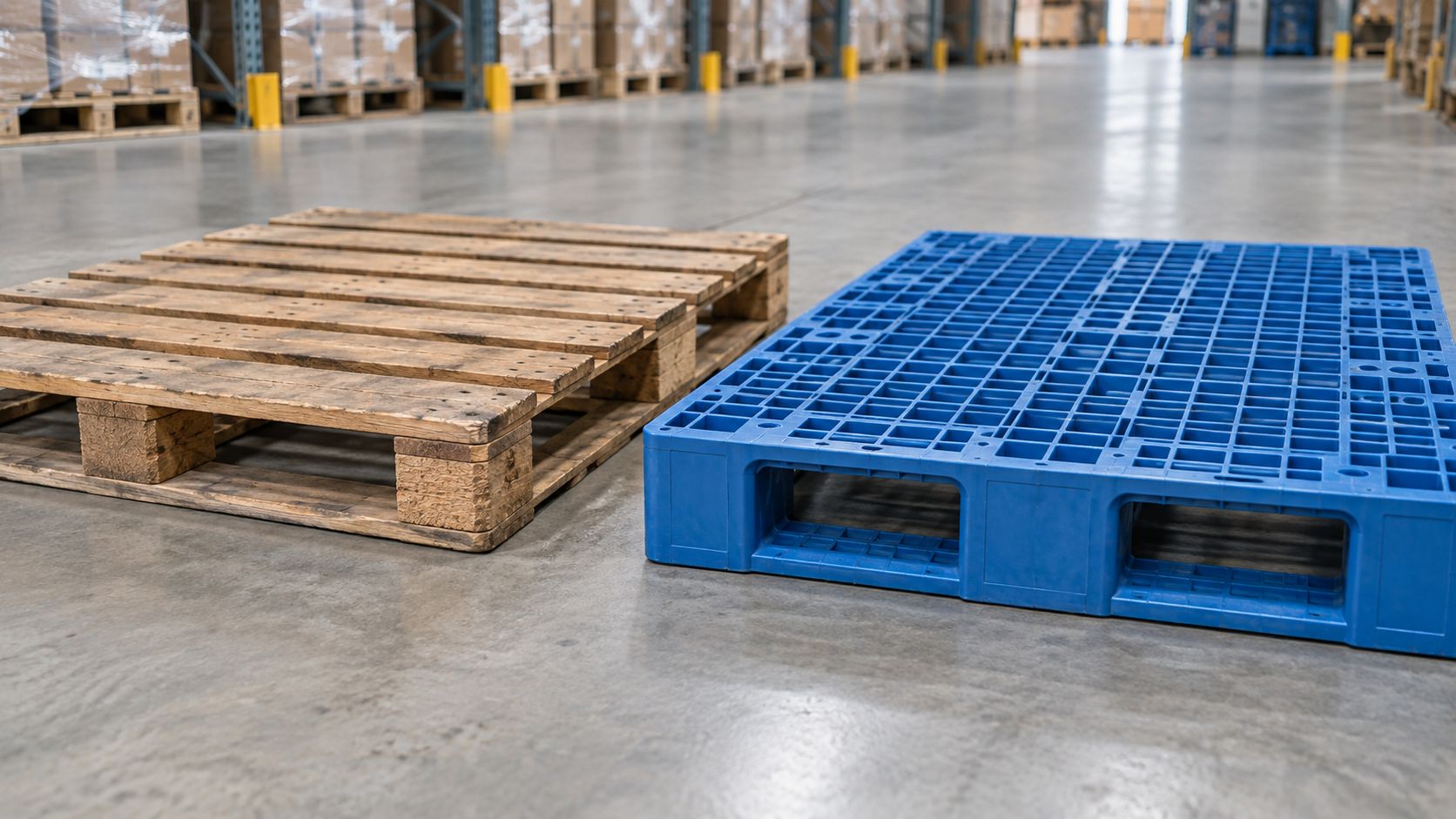
Businesses in the UAE and wider GCC are
switching from wooden to plastic pallets because plastic pallets last many more
trips, stay dimensionally consistent for automated warehouses, are washable and
free of nails and splinters, need no ISPM 15 heat treatment for export, resist
moisture and pests, and can be recycled at end of life. Wood still has a lower
purchase price and suits some one-way shipments, but in reusable, closed-loop
operations plastic pallets usually deliver a lower cost per trip.
For decades the
wooden pallet was the default in Gulf warehouses. That is changing. Across
Dubai, Abu Dhabi, Riyadh and Dammam, new distribution centres are being built
around automation, food safety audits are becoming stricter, exporters are
dealing with phytosanitary rules and boards are asking for measurable
sustainability progress. Each of these trends favours plastic.
This article
explains the eight main reasons businesses are moving to plastic pallets, where
wooden pallets still make sense, and how to plan a switch without disrupting
operations.
Key takeaways
■ Durability: plastic pallets complete many more trips than
wood in closed loops.
■ Automation: consistent dimensions and weights keep
conveyors and AS/RS running.
■ Compliance: plastic is washable for hygiene audits and
exempt from ISPM 15 for export.
■ Sustainability: reuse and end-of-life recyclability
support GCC circular economy goals.
■ Balance: wood can still win for one-way, low-value
shipments.
What Is Driving the Shift From Wooden to
Plastic Pallets in the GCC?
Several
regional trends are converging. Logistics investment under Saudi Vision 2030
and the UAE's industrial growth agenda is producing larger, more automated
warehouses. Food security strategies are expanding cold storage capacity.
Export-focused manufacturers in free zones such as JAFZA, KEZAD and SAIF Zone
ship to markets with strict wood packaging rules. And businesses of every size
face growing expectations to report on waste and resource use. Plastic pallets
address all of these at once.
1. Plastic Pallets Last Longer in Reusable
Loops
Wooden pallets
are assembled from boards and nails. Every forklift impact risks a split board
or a loose nail, and repairs become a routine cost. In the Gulf climate, wood
also dries out, shrinks and cracks in summer heat, and absorbs moisture in
humid coastal conditions. A one-piece moulded plastic pallet has no joints to
loosen and no boards to break, so it keeps working through many more trips when
used within its rated capacity.
2. They Work Reliably With Automated Warehouses
Automated
storage and retrieval systems, pallet shuttles and conveyors depend on
consistent pallet dimensions, flat runners and predictable weight. Wooden
pallets vary from one to the next, warp with moisture and can shed splinters or
loose boards that jam equipment and trigger stoppages. Moulded plastic pallets
are produced to tight tolerances and can carry embedded RFID tags or barcodes
for automatic identification, making them the natural partner for the automated
distribution centres now being commissioned across the region.
3. They Meet Hygiene Expectations in Food,
Pharma and Healthcare
Plastic pallets
are non-porous and washable, so they can be cleaned and sanitised to the
standard required in food production, pharmaceutical distribution and
healthcare logistics. They eliminate the splinters and nails that food safety
plans treat as foreign-body hazards, and they do not absorb spills or support
mould. This makes it much easier to satisfy food safety inspectors, customer
audits and Good Distribution Practice expectations in pharmaceutical supply
chains.
4. No ISPM 15 Treatment Needed for Export
ISPM 15 is the
international standard that requires wooden packaging material, including
pallets, to be heat-treated or fumigated and marked before crossing borders, to
stop the spread of wood pests. Shipments on non-compliant wooden pallets can be
delayed, re-treated or rejected at destination. Plastic pallets are not wood
packaging material, so ISPM 15 does not apply to them. For exporters in the UAE
and Saudi Arabia, that removes a treatment cost, a documentation step and a
source of customs risk.
5. They Are Safer for People and Products
Protruding
nails and splinters are a common cause of hand injuries in warehouses and
damage to cartons, sacks and shrink-wrap. Broken wooden boards can also cause
loads to collapse in racking. Plastic pallets have smooth surfaces, consistent
weight and no loose components, reducing both injury risk and product damage
claims.
6. They Resist Moisture, Pests and Climate
Extremes
Wood absorbs
moisture, which changes its weight, weakens it and encourages mould. Timber can
also harbour termites and other insects. Plastic pallets are unaffected by
humidity, condensation or washdown water and offer nothing for pests to live
in. For outdoor staging in Gulf sunlight, UV-stabilised plastic pallets are
available to protect against surface degradation.
7. They Support Sustainability and Circular
Economy Goals
A pallet that
is reused many times reduces the number of pallets that must be produced,
transported and disposed of. At the end of their working life, HDPE and PP
pallets can be ground and reprocessed into new plastic products. The GCC
imports most of the timber used for wooden pallets, and damaged wooden pallets
frequently end up in landfill. Reusable, recyclable plastic pallets align with
the UAE Circular Economy Policy 2021–2031, the UAE Net Zero 2050 Strategic
Initiative and the Saudi Green Initiative, and give businesses a tangible
action to include in sustainability reporting.
8. They Deliver a Lower Cost per Trip Over Time
A plastic
pallet costs several times more than a basic wooden pallet to buy. The
comparison that matters, however, is cost per trip: purchase price plus
repairs, treatment and cleaning, minus end-of-life value, divided by trips
completed. In closed loops, for example between a factory and its own
distribution centres, the longer life and lower maintenance of plastic pallets
typically outweigh the higher purchase price. The break-even point depends on
cycle time, loss rates and handling conditions.
What Are the Trade-Offs of Plastic Pallets?
A credible
decision considers both sides. Plastic pallets have a higher upfront cost, so
they deliver most value where pallets come back. In open loops, where pallets
leave your control, losses can erode the investment unless pallets are marked
and tracked. Under-specified plastic pallets can deflect in racking in hot
warehouses, so load ratings must match real storage temperatures. Plastics also
add to a building's fire load, so check requirements under the UAE Fire and
Life Safety Code or your local civil defence authority, and ask about
fire-retardant grades where required.
When Do Wooden Pallets Still Make Sense?
■ One-way shipments where the pallet will not return and
purchase price is the only cost that matters.
■ Very low pallet usage, where the investment in a plastic
pool cannot be recovered.
■ Oversized or irregular loads that need a custom-built
wooden base.
■ Established pooling or repair systems already operating
efficiently for wooden pallets.
How Can a Business Switch From Wooden to
Plastic Pallets?
1.
Map your current pallet
flows, including trips, losses, repairs and treatment costs.
2.
Start with closed loops
where pallets reliably return, such as internal transfers or dedicated customer
routes.
3.
Specify pallets by
load, storage method, handling equipment and environment.
4.
Trial samples in your
own racking and on your own equipment before committing.
5.
Phase in plastic
pallets zone by zone, starting with hygiene-critical or automated areas.
6.
Mark or tag pallets to
track them and control losses.
7.
Send retired wooden
pallets for reuse or recycling rather than landfill.
Make the Switch With a GCC Manufacturer
IPlast
Industries manufactures plastic pallets in Mussaffah, Abu Dhabi, and Al Jubail,
Saudi Arabia, supplying businesses across the UAE, KSA and wider GCC. Our team
can help you map current pallet use, select models for each application and
plan a phased transition from wood to plastic.
Frequently
Asked Questions
Why
are plastic pallets better than wooden pallets?
Plastic pallets
last longer in reusable operations, have consistent dimensions for automated
equipment, are washable and free of nails and splinters, resist moisture and
pests, need no ISPM 15 treatment for export and can be recycled at end of life.
Are
plastic pallets more expensive than wooden pallets?
Yes, plastic
pallets cost more to buy. In closed-loop operations where pallets are reused
many times, they often cost less per trip than wooden pallets because they last
longer and need fewer repairs.
Do
plastic pallets need ISPM 15 certification for export?
No. ISPM 15
applies to wood packaging material. Plastic pallets are not made of wood, so
they do not require heat treatment, fumigation or ISPM 15 marking for
international shipments.
How
long do plastic pallets last compared with wooden pallets?
Service life
depends on loads, handling and environment, but in closed-loop operations a
well-specified plastic pallet typically completes many more trips than a wooden
pallet, which suffers from broken boards, loose nails and moisture damage.
Are
plastic pallets environmentally friendly?
Plastic pallets
support sustainability when they are reused many times and recycled at end of
life. Reuse reduces the number of pallets produced and discarded, and HDPE and
PP pallets can be reprocessed into new plastic products.
Are
plastic pallets a fire risk?
Like other
plastics, plastic pallets add to the fire load of a building. Businesses should
follow the UAE Fire and Life Safety Code and local civil defence requirements
for pallet storage, and can specify fire-retardant grades where required.
Build
Your Business Case for Plastic Pallets
Share your
pallet volumes, cycle times and storage methods with IPlast, and our team will
help you identify where plastic pallets deliver the fastest return. Contact us
through iplastindustries.com.